http://files.libertyfund.org/pll/quotes/150.html
Franz Oppenheimer argues that there are two fundamentally opposed ways of acquiring wealth: the “political means” through coercion, and the “economic means” through peaceful trade (1922)
About this Quotation:
Oppenheimer picks up a theory of the state which was common among early 19th century French liberals such as Jean-Baptiste Say, Charles Comte, Charles Dunoyer, Frédéric Bastiat, and Augustin Thierry. As Oppenheimer correctly notes, Karl Marx got himself horribly confused on this matter, seeing slavery as an economic category and seeing economics as driven by “force”. We have been paying the price for this confusion every since.
Other quotes about Origin Of Government:
· 2010: Sidney argues that a People’s liberty is a gift of nature and exists prior to any government (1683)
18 February, 2007
|
|
Franz Oppenheimer argues that there are two fundamentally opposed ways of acquiring wealth: the “political means” through coercion, and the “economic means” through peaceful (free) trade (1922) |
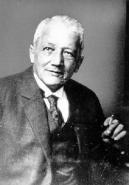
Franz
Oppenheimer, in his analysis of the origin of the state,
argues that there are two fundamentally opposed ways of acquiring
wealth:
the “political means” through coercion, and the “economic means”
through peaceful (free) trade:
There are two fundamentally opposed means whereby man, requiring sustenance, is impelled to obtain the necessary means for satisfying his desires. These are work and robbery, one’s own labor and the forcible appropriation of the labor of others… I propose in the following discussion to call one’s own labor and the equivalent exchange of one’s own labor for the labor of others, the “economic means” for the satisfaction of needs, while the unrequited appropriation of the labor of others will be called the “political means.”
The full passage from which this quotation was taken can be be viewed below (front page quote in bold):
(a) Political
and Economic Means
There are two fundamentally opposed means whereby man, requiring sustenance,
is impelled to obtain the necessary means for satisfying his desires. These are
work and robbery, one’s own labor and the forcible appropriation of the labor
of others. Robbery! Forcible appropriation! These words convey to us
ideas of crime and the penitentiary, since we are the contemporaries of a
developed civilization, specifically based on the inviolability of property.
And this tang is not lost when we are convinced that land and sea robbery is
the primitive relation of life, just as the warriors’ trade—which also for a
long time is only organized mass robbery—constitutes the most respected of
occupations. Both because of this, and also on account of the need of having,
in the further development of this study, terse, clear, sharply opposing terms
for these very important contrasts, I propose in the following discussion to
call one’s own labor and the equivalent exchange of one’s own labor for the
labor of others, the “economic means” for the satisfaction of needs, while the
unrequited appropriation of the labor of others will be called the “political
means.”
The idea is not altogether new; philosophers of history have at all times found
this contradiction and have tried to formulate it. But no one of these
formulæ has carried the premise to its complete logical end. At no place
is it clearly shown that the contradiction consists only in the means by which
the identical purpose, the acquisition of economic objects of consumption, is
to be obtained. Yet this is the critical point of the reasoning. In the case of
a thinker of the rank of Karl Marx, one may observe what confusion is brought
about when economic purpose and economic means are not strictly differentiated.
All those errors, which in the end led Marx’s splendid theory so far away from
truth, were grounded in the lack of clear differentiation between the means of
economic satisfaction of needs and its end. This led him to designate slavery as
an “economic category,” and force as an “economic force”—half truths which are
far more dangerous than total untruths, since their discovery is more
difficult, and false conclusions from them are inevitable.